
The WTF War
Two weeks of “peace,” zero end to the war.

The ceasefire did not start this story. It interrupted it.
In early 2026, millions of Iranians poured into the streets in nationwide uprisings against a regime that answered with blackouts, live fire, and massacres that left thousands dead and many more disappeared. Weeks later, on February 28, the United States and Israel launched nearly 900 strikes in 12 hours across Iran, killing Supreme Leader Ali Khamenei and destroying key military and intelligence sites, while Iran responded with missile and drone barrages against Israel, U.S. bases, and Gulf states and effectively closing the Strait of Hormuz, choking off roughly a fifth of the world’s oil and gas.
For the outside world, this was the start of the Iran war; for many Iranians who had just watched their friends and family gunned down in January, it felt like the first real chance in a generation to break the regime that had tried to crush them.
The United States and Iran say they have agreed to a two-week ceasefire, but they are not describing the same deal.
President Trump announced the ceasefire on Truth Social on April 7, on one condition: Iran must reopen the Strait of Hormuz. The pause, he says, applies only to direct U.S.–Iran hostilities. Hezbollah is not included. Senior American and Israeli officials have made clear that Israel’s campaign in Lebanon is explicitly outside the ceasefire.
On April 8, Netanyahu said it outright: “There’s no ceasefire in Lebanon.” He has authorized Israeli diplomats to enter talks with Lebanon beginning next week in Washington, D.C., focused on Hezbollah’s disarmament, but he has emphasized that diplomacy will happen alongside military operations, not instead of them.
Iran says the opposite. Tehran’s negotiators insist there is no real ceasefire if attacks on Hezbollah continue. Iran’s 10-point plan demands a complete halt to warfare across Iran, Iraq, Lebanon, and Yemen, as well as full sanctions relief and the unfreezing of Iranian assets. An Iranian source said that negotiations are suspended as long as Israel continues its attacks and the United States does not enforce a broader ceasefire that includes Lebanon.
There are two competing definitions of this ceasefire.
The Strait of Hormuz
This pause is built around one chokepoint: the Strait of Hormuz, the narrow waterway through which roughly 20 percent of the world’s oil and gas flows.
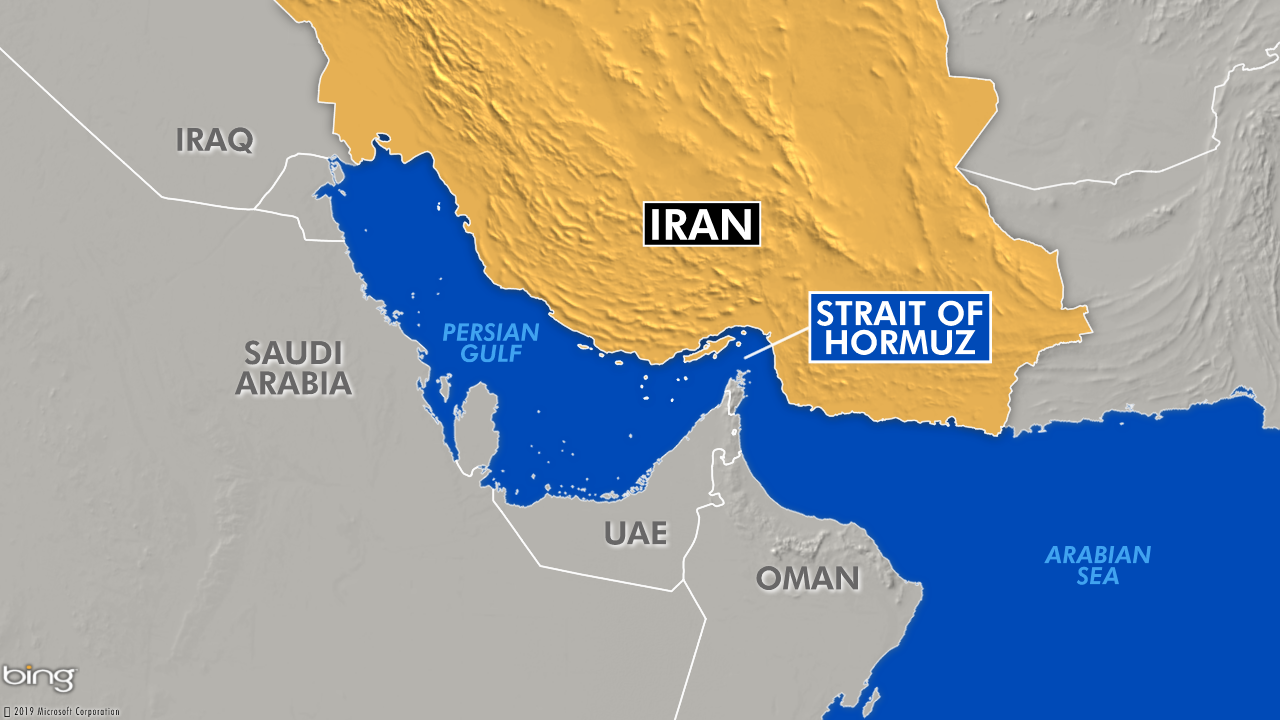
Iran effectively blockaded it beginning February 28, 2026. As of April 9, shipping traffic remains at a virtual standstill, with an estimated 230 loaded oil tankers waiting inside the Gulf.
The ceasefire requires Iran to allow vessels to transit under Iranian military coordination. That has not happened in any meaningful way.
Trump has warned Iran that it cannot charge fees to oil tankers. Yet reports from late March and early April show that Iran has treated the strait like a de facto toll booth, demanding fees paid in Chinese yuan and, in at least one report, rejecting even that and demanding one dollar per barrel in Bitcoin from tankers trying to pass. Oil prices have climbed back above one hundred dollars per barrel as shipping remains restricted.
Under international law, the strait must remain open. Iran cannot legally shut it or charge for passage, but it can threaten to, and it has. That threat is the pressure point on which this entire ceasefire rests.
The Talks
Pakistan brokered the ceasefire and is supposed to act as mediator. But in a post on X yesterday, Pakistan’s defense minister called Israel “evil” and a “curse to humanity.” He deleted the post, but the damage was done.
At the same time, a United States delegation is preparing for high-level talks in Islamabad this weekend with Iranian officials.
The basic framework is:
Phase 1: two-week temporary ceasefire while talks proceed
Phase 2: negotiations for a permanent peace
The drama of this ceasefire is that it came at the last possible moment: Trump had set a hard deadline to hit Iran’s power plants, bridges, and oil facilities, and U.S. bombers were reportedly already in the air when Tehran finally said yes.
The United States delivered a 15-point proposal to Iran on March 25 through Pakistani intermediaries. It is believed to include commitments from Iran to forgo nuclear weapons, surrender highly enriched uranium, limit its military capabilities, curb support for regional proxies, reopen Hormuz, and possibly recognize Israel’s right to exist.
Iran’s counteroffer, a 10-point plan, includes:
Regulating passage through Hormuz under Iranian oversight
Ending all attacks on Iran and its proxy forces across the region
Fully lifting sanctions and unfreezing Iranian assets
Providing compensation for reconstruction
Passing a binding United Nations resolution to secure any final peace deal
IRGC commander, Iranian Foreign Minister Araghchi has said Washington acknowledged the “general framework” of Iran’s 10-point plan as a starting point, even as Tehran continues to weigh the United States 15-point proposal. There is still no clean diplomatic channel. Even the basics, such as who is negotiating, where, and whether talks are currently active or suspended, are shifting in real time.
Why the War Is Still Continuing
Nothing about the core conflict has been resolved.
Israel is not operating under the same scope as this ceasefire because Hezbollah was never included.
Since October 8, 2023, Iranian proxy Hezbollah has been consistently launching missiles at Israeli civilians. On the evening of April 8, Netanyahu described what Israel called its “greatest blow to Hezbollah since the pagers incident.” In ten minutes, Israel struck one hundred targets across Lebanon, inflicting massive damage on Iran’s missile production, military infrastructure, and parts of its nuclear network.
Iran points to those strikes as proof that the ceasefire is being violated, while at the same time trying to expand the definition of the agreement after the fact. That is the core disconnect.
The Reality on the Ground
The war on the Israel–Lebanon border remains active. Here is an interception of a Hezbollah missile aimed at Israeli civilians yesterday.
However, with only one front of this war fully active right now, daily life inside Israel has started moving again, at least on the surface. After roughly forty days of disruption, schools have reopened. Ben Gurion Airport is operating without the restrictions that defined the last month. There is a slow shift back toward routine.
Public opinion tells a different story. A new poll conducted by Mano Geva for Channel 12 News found:
79 percent of Israelis support continuing attacks on Hezbollah in Lebanon
53 percent oppose a ceasefire with Iran
Only 30 percent support a ceasefire at all
In other words, Israelis are willing to give up the temporary comfort of normal life if it means finally removing the threat on their northern border.
Where Things Stand Now
This appears to be a narrow, conditional pause tied to Hormuz.
The United States is pausing direct strikes on Iran. Defense Secretary Pete Hegseth has said the United States military will ensure Iran complies and comes to the table. Israel is continuing operations against Hezbollah, which both Israel and the United States have made clear is not part of this agreement. Nothing about the threat from Hezbollah has changed.
Iran is trying to fold Hezbollah into the ceasefire after the fact. Its 10-point plan is now its public basis for negotiations, even as officials say talks are suspended until Lebanon is included.
Hezbollah remains in a strategic trap: hit hard militarily but still operational, excluded from the ceasefire while Tehran demands its protection.
And then there are the 95 million Iranians, the large majority held captive by a terrorist regime that monitors their every move while pouring state resources into foreign wars instead of basic needs at home. Over the last three months, they have watched tens of thousands of fellow citizens murdered or arrested for protesting the regime. This war gave them a sudden, real hope of regime change. This ceasefire, as it stands, pushes that hope further away.
In the United States, there is confusion, anger, and deep skepticism about what this war has actually achieved and whether its goals were met. Have Iran’s nuclear capabilities been permanently crippled, or will another wave of attacks be required?
The two-week pause ends on April 20. Whether the war resumes or the ceasefire is extended is unknown. For now, unpredictability is the only constant.
Well done analysis, Samantha. First, a ceasefire with the mad murderous Muslims is always broken by them. Second, it is merely an opportunity for the Muslim to repair, re-arm and recalculate. A ceasefire with them has never been a successful stepping stone towards peace. If Trump thinks this ceasefire will accomplish anything but a break in the action, he is listening to the wrong advisors. Peace is not possible until the mad Muslims are eliminated.
I’m really worried about what’s going on here in the U.S. The “blame Israel” narrative is really taking hold on both the political left and right.